
The United States Navy is the maritime branch of the United States Armed Forces. Its history and role in protecting and projecting American power globally are nothing short of legendary. In this article, we will delve into the rich history, capabilities, and significance of the United States Naval Forces.
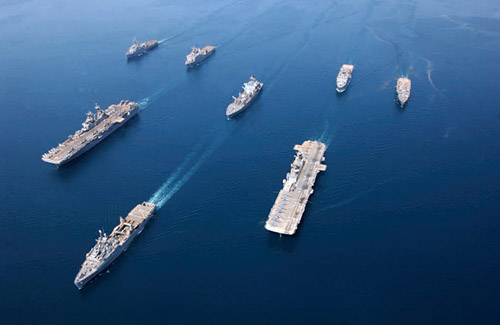
Today, the United States Navy is the most powerful and technologically advanced naval force in the world. Its capabilities extend across various domains:
- Surface Fleet: The Navy’s surface fleet is a combination of powerful destroyers, cruisers, and aircraft carriers. The Nimitz-class and Gerald R. Ford-class carriers are the largest warships ever built and serve as the centerpiece of American naval power projection. They are essentially floating cities, capable of launching various aircraft and supporting a wide range of missions.
- Submarine Force: The Navy operates nuclear-powered attack submarines (SSNs) and ballistic missile submarines (SSBNs). These submarines are stealthy and are equipped with advanced weaponry, making them a vital component of the U.S. nuclear deterrent and force projection capabilities.
- Naval Aviation: The Naval aviation arm includes various fixed-wing aircraft like fighter jets, electronic warfare planes, surveillance aircraft, as well as helicopters. Aircraft carriers are essentially floating airports, allowing the Navy to conduct air operations in any corner of the globe.
- Amphibious Assault: The Navy’s amphibious forces work in tandem with the Marine Corps. They possess the ability to conduct large-scale amphibious operations, transporting Marines and equipment to hostile shores and providing critical support.
- Cyber and Information Warfare: In the modern era, the Navy is also heavily invested in cyber warfare and information operations. It plays a significant role in defending against cyber threats and conducting electronic warfare.
The United States Navy maintains a global presence through a network of bases and forward-deployed assets. This presence is not only essential for defending U.S. interests but also contributes to international peace and security. Naval vessels routinely conduct freedom of navigation operations to protect the vital flow of goods and ensure open access to international waters.
The United States Navy is not just a formidable military force; it’s a symbol of American values, commitment to freedom, and a safeguard against threats to global stability. Its rich history, advanced capabilities, and dedication to defending the nation’s interests make it a source of pride for the United States and a critical component of international security. The sailors who serve in the Navy, past and present, continue to exemplify the highest standards of honor, courage, and commitment.
 Stocktrek Images Blog